10 Social Media Posting Best Practices for Growth in 2025

Master our top 10 social media posting best practices to boost engagement and growth. Get actionable tips for visuals, captions, and strategy.
In 2025, simply posting content is no longer enough. To capture attention, build a loyal audience, and drive growth, you need a strategy grounded in proven social media posting best practices. Small businesses, social media managers, and creators often face the same challenge: producing consistent, high-quality content that not only looks professional but also generates meaningful engagement. Without a clear plan, your efforts can feel like shouting into an empty room.
The right approach transforms your social media from a content graveyard into a powerful engine for growth. This guide breaks down the essential practices that cover everything from content strategy and visual creation to community engagement and performance analysis. Whether you're looking to establish authority, educate your audience, or drive conversions, mastering these fundamentals will provide a clear roadmap to achieving your goals. For a complementary overview of essential strategies, you can also delve into these 10 Social Media Best Practices to Dominate in 2025.
We'll move beyond generic advice to explore specific, actionable tips and real-world examples that will help you refine your process and make every post count. You will learn how to build a content mix that resonates, craft compelling platform-specific captions, leverage hashtags effectively, and create visually appealing graphics that stop the scroll. Forget guesswork; it's time to implement a system that delivers measurable results and turns your social media presence into a genuine asset for your brand.
1. Use High-Quality, Visually Appealing Content
In the crowded, fast-scrolling world of social media, high-quality visuals are non-negotiable. Professional images, well-produced videos, and polished graphics are the hooks that stop users mid-scroll, capturing their attention far more effectively than text-only posts. This is a foundational element of the best social media posting practices because visuals are processed by the brain significantly faster than text, leading to better brand recall, higher engagement rates, and increased shareability.
For small businesses, creators, and agencies, maintaining a consistent flow of professional visual content can be a major bottleneck. Brands like Starbucks, with its aesthetically pleasing product photos, and Nike, with its cinematic video content, set a high bar. While you don't need a Hollywood budget, the expectation for quality is real. The challenge isn't just creating one great graphic; it's producing a steady stream of them for a demanding content calendar.
How to Implement a Strong Visual Strategy
A successful visual strategy relies on consistency and quality. The goal is to create a recognizable and professional brand aesthetic across all your posts.
- Invest in Good Source Material: Start with a quality smartphone camera or professional photography. Clean, well-lit images are the foundation of any great visual post.
- Establish a Consistent Style: Use a consistent set of filters, fonts, and color palettes. This builds a cohesive feed that is instantly recognizable to your followers.
- Optimize for Each Platform: Ensure your images and graphics are sized correctly for Instagram posts, Stories, Facebook feeds, and LinkedIn. Each platform has unique specifications.
Key Insight: The biggest hurdle for most teams isn't a lack of design skill but a lack of time. Manual design work is a significant time sink that prevents a focus on higher-level strategy and community engagement.
Automating the visual creation process can solve this problem. For instance, AI-powered agents like Postbae can autonomously generate professional visual social media graphics, including multi-slide carousels and educational infographics. It works in the background to produce industry-specific visual content, eliminating the need for manual design work and allowing teams to focus on a broader strategy while still delivering high-quality visuals.
2. Use High-Quality, Visually Appealing Content
In the crowded, fast-scrolling world of social media, high-quality visuals are non-negotiable. Professional images, well-produced videos, and polished graphics are the hooks that stop users mid-scroll, capturing their attention far more effectively than text-only posts. This is a foundational element of the best social media posting best practices because visuals are processed by the brain significantly faster than text, leading to better brand recall, higher engagement rates, and increased shareability.

For small businesses, creators, and agencies, maintaining a consistent flow of professional visual content can be a major bottleneck. Brands like Starbucks, with its aesthetically pleasing product photos, and Nike, with its cinematic video content, set a high bar. While you don't need a Hollywood budget, the expectation for quality is real. The challenge isn't just creating one great graphic; it's producing a steady stream of them for a demanding content calendar.
How to Implement a Strong Visual Strategy
A successful visual strategy relies on consistency and quality. The goal is to create a recognizable and professional brand aesthetic across all your posts.
- Invest in Good Source Material: Start with a quality smartphone camera or professional photography. Clean, well-lit images are the foundation of any great visual post.
- Establish a Consistent Style: Use a consistent set of filters, fonts, and color palettes. This builds a cohesive feed that is instantly recognizable to your followers.
- Optimize for Each Platform: Ensure your images and graphics are sized correctly for Instagram posts, Stories, Facebook feeds, and LinkedIn. Each platform has unique specifications.
Key Insight: The biggest hurdle for most teams isn't a lack of design skill but a lack of time. Manual design work is a significant time sink that prevents a focus on higher-level strategy and community engagement.
Automating the visual creation process can solve this problem. For instance, AI-powered agents like Postbae can autonomously generate professional visual social media graphics, including multi-slide carousels and educational infographics. It works in the background to produce industry-specific visual content, eliminating the need for manual design work and allowing teams to focus on a broader strategy while still delivering high-quality visuals. To explore this approach further, you can learn more about an automated social media content creation tool on postbae.com.
3. Write Compelling, Platform-Specific Captions
A stunning visual may stop the scroll, but a compelling caption is what drives the conversation and inspires action. Platform-specific captions provide essential context, showcase brand personality, and encourage meaningful interaction. This is a critical component of social media posting best practices because a one-size-fits-all approach ignores the unique culture and user expectations of each platform, leading to missed opportunities for engagement.
Brands that master this art see tremendous returns. For instance, Wendy's witty, concise Twitter captions generate viral conversations, while Neil Patel uses longer, educational captions on LinkedIn to establish thought leadership and drive traffic. The challenge for small businesses and creators is not just writing a good caption, but consistently adapting the tone, length, and call-to-action for every platform without it becoming a major time drain.
How to Implement a Strong Caption Strategy
A successful caption strategy is built on adaptability and a clear understanding of your audience on each network. The goal is to craft a message that feels native to the platform and resonates with its specific user base.
- Hook Readers Immediately: Start your caption with a strong, attention-grabbing first line. This is crucial for stopping users from scrolling past your post.
- Adapt Tone and Length: Keep Twitter captions short and impactful. Use Instagram's longer character limit for storytelling and community building. For LinkedIn, adopt a more professional and educational tone. You can learn more about how to craft effective LinkedIn posts here.
- Include a Clear Call-to-Action (CTA): Guide your audience on what to do next. Ask a question, encourage them to tag a friend, or direct them to a link.
- Improve Readability: Use line breaks and emojis strategically to break up long blocks of text, making your captions easier to scan and digest, especially on mobile devices.
Key Insight: The biggest hurdle for teams is not a lack of writing ability, but the time required to brainstorm and tailor unique captions for multiple platforms daily. This repetitive task often pulls focus away from strategic planning.
To streamline this process, leveraging a tool like an Instagram Caption Generator can be highly effective. It helps generate creative ideas and starting points, which you can then refine to fit your brand's unique voice and the specific context of each platform. This saves valuable time, allowing you to focus on community management and overall strategy.
4. Leverage Hashtags Strategically
Hashtags are the indexing system of social media, acting as signposts that guide users to relevant conversations and content. More than just a trend, they are a fundamental tool for discoverability, allowing your posts to reach audiences beyond your immediate followers. Implementing strategic hashtags is a core component of the best social media posting practices because it connects your content to broader trends, niche communities, and active discussions, significantly boosting visibility and engagement.
Brands have successfully turned hashtags into powerful community-building and campaign-driving tools. For example, Glossier’s #GlossierGenG created a user-generated content hub, while Airbnb's #BelongAnywhere campaign reinforced its brand ethos. The challenge for small businesses and creators isn't just knowing to use hashtags, but understanding how to create a balanced mix that attracts the right audience without appearing spammy or getting lost in oversaturated feeds.
How to Implement a Strategic Hashtag Mix
A strong hashtag strategy is about relevance and reach. The goal is to use a thoughtful combination of tags that categorizes your content and exposes it to interested users.
- Create a Tiered Hashtag System: Don’t just use popular hashtags. Mix broad, high-volume tags (e.g., #SocialMediaMarketing) with mid-tier, specific tags (e.g., #SmallBusinessTips) and niche, community-focused tags (e.g., #StartupGrowthHacks) to maximize your reach.
- Develop a Branded Hashtag: Create a unique hashtag for your brand or specific campaigns to encourage user-generated content and build a dedicated community around your business.
- Optimize for Each Platform: Tailor your hashtag usage to the platform. Instagram benefits from 20-30 tags, while Twitter and LinkedIn perform better with a more conservative 1-3 highly relevant tags.
Key Insight: The biggest hurdle for most teams is the time-consuming process of researching, organizing, and consistently applying relevant hashtags to every post. This manual effort often detracts from focusing on content quality and community management.
Automating other parts of your content workflow can free up the time needed for strategic tasks like hashtag research. For instance, AI-powered agents like Postbae can autonomously generate the visual content for your posts, such as multi-slide carousels and educational infographics. By handling the time-intensive design work in the background, it allows your team to dedicate more focus to perfecting captions, engaging with comments, and refining hashtag strategies that drive real growth.
5. Encourage User Engagement and Community Interaction
Social media is a two-way street, not a broadcast channel. Designing posts that actively invite comments, shares, and direct interaction is crucial for building a loyal community and signaling relevance to platform algorithms. This approach transforms passive followers into active participants, fostering a sense of belonging and making your brand more memorable. This is one of the most vital social media posting best practices because high engagement rates directly boost your content's organic reach.

Brands excelling at this treat their audience like a focus group. Netflix often uses interactive tweets asking viewers to choose their next binge-watch, while Sephora's #SephoraSquad campaign thrives on user-generated content. The challenge for many small businesses and creators is consistently crafting posts that naturally spark conversation. It requires a shift from a "what we want to say" mindset to a "what we want to ask" approach.
How to Implement a Strong Engagement Strategy
A successful engagement strategy makes your audience feel heard, valued, and connected to your brand. The goal is to create a consistent feedback loop that benefits both you and your followers.
- Ask Open-Ended Questions: Instead of simple "yes/no" questions, ask "why," "how," or "what if" to encourage more detailed and personal responses.
- Use Interactive Features: Leverage platform-native tools like Instagram Stories polls, quizzes, and question stickers to make participation easy and fun.
- Prompt User-Generated Content (UGC): Create a branded hashtag and encourage followers to share their own photos or stories related to your product or industry. Feature the best submissions on your feed.
- Respond Promptly and Thoughtfully: Aim to reply to comments and messages quickly, especially within the first hour of posting. Acknowledge users by name and engage with their feedback.
Key Insight: The primary barrier to strong community engagement is often a lack of compelling, conversation-starting content. Teams get stuck in a promotional cycle and forget to create posts that are inherently shareable or interactive.
Automating the creation of educational content can free up time to focus on community management. For instance, an AI agent like Postbae can autonomously generate high-quality visual content, such as myth-vs-fact infographics or multi-slide carousels with industry tips. With a steady supply of engaging visual posts, your team can dedicate its energy to writing compelling captions that ask questions, responding to comments, and building genuine relationships with your audience.
6. Utilize Stories and Ephemeral Content
Ephemeral content like Instagram Stories, Reels, and TikTok videos has become central to modern social media posting best practices. These short-lived, vertical formats offer a raw, authentic, and immediate way to connect with your audience. Unlike polished feed posts, Stories create a sense of urgency and exclusivity, encouraging followers to check in daily for fear of missing out. This lower-pressure format fosters more frequent, personal touchpoints and drives immediate engagement.
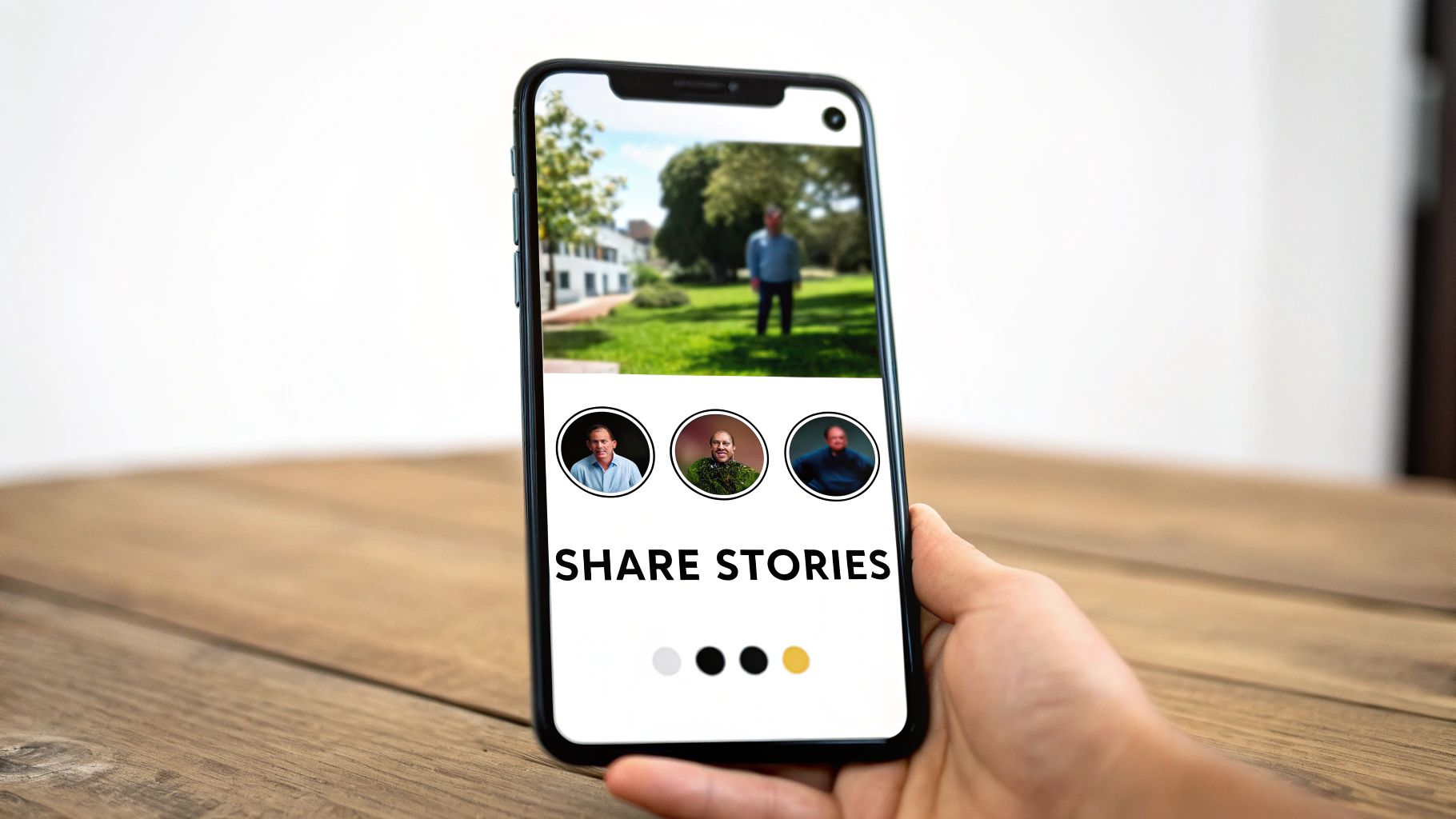
The primary challenge is maintaining a daily presence with content that feels spontaneous yet valuable. Brands like BMW use Stories to create hype for new product launches, while creators leverage them for real-time Q&As and behind-the-scenes glimpses. The goal is to build a narrative that unfolds day by day, making your brand a consistent part of your audience’s daily media consumption. This requires a different content mindset, one focused on interaction and in-the-moment relevance rather than evergreen perfection.
How to Implement a Strong Ephemeral Content Strategy
A successful ephemeral content strategy is built on consistency and interaction. The aim is to make your audience feel like they are part of an ongoing conversation, not just passive consumers of content.
- Post Daily for Visibility: Aim for at least one Story post per day to stay at the top of your followers' feeds and maintain consistent brand visibility.
- Use Interactive Stickers: Leverage polls, quizzes, question boxes, and sliders to actively engage your audience. This not only boosts engagement metrics but also provides valuable feedback.
- Tell a Cohesive Narrative: Structure your Stories in sequences that tell a mini-story, whether it's a "day in the life," a product tutorial, or a behind-the-scenes look at an event.
- Share User-Generated Content: Reposting content from your followers is a powerful way to build community, show appreciation, and source authentic material for your Stories.
Key Insight: The biggest hurdle with Stories is the demand for constant, fresh content. Teams often struggle to generate daily ideas and visuals that align with their brand while also promoting their core feed content.
Automating the creation of your primary feed visuals can free up significant time for ephemeral content. For example, using an AI agent like Postbae to autonomously generate your educational carousels and infographics ensures your core content calendar is always full. This allows you to redirect creative energy toward producing engaging, spontaneous Stories and Reels, bridging the gap between polished feed posts and authentic, daily interactions.
7. Post Video Content Strategically
In a mobile-first social media landscape, video content is the undisputed king of engagement. Platforms like TikTok, Instagram (Reels), and YouTube (Shorts) have rewired user behavior to favor dynamic, short-form video, making it a critical component of the best social media posting practices. Video captures attention more effectively than static images, tells stories with greater emotional impact, and is heavily favored by platform algorithms, leading to significantly higher reach, shares, and audience retention.
For small businesses and creators, this presents both a massive opportunity and a challenge. Brands like Casey Neistat built empires on vlogging, while countless creators have achieved viral success on TikTok by mastering short-form video. The expectation is for authentic, fast-paced content, but the challenge lies in consistently producing videos that hook viewers instantly, deliver value, and align with constantly shifting platform trends.
How to Implement a Strategic Video Approach
A successful video strategy prioritizes impact and adaptability. The goal is to create content that grabs attention within the first three seconds and is optimized for how users consume media today.
- Hook Viewers Immediately: Start your video with a compelling visual, a provocative question, or a surprising statement. The first few seconds are crucial for stopping the scroll.
- Optimize for Vertical and Silent Viewing: The vast majority of social media video is watched on mobile phones, so always shoot and edit in a vertical 9:16 format. Add clear, easy-to-read captions, as many users watch with the sound off.
- Keep It Concise and Action-Oriented: For platforms like Reels and TikTok, aim for videos under 60 seconds to maximize completion rates. End with a clear Call to Action (CTA), telling viewers what you want them to do next.
Key Insight: The primary bottleneck for video isn't production quality but the time and resources required to ideate, shoot, edit, and repurpose content across multiple platforms. This often leaves no time for other essential content types.
While video is crucial, a balanced content mix is still necessary. Automating the creation of static visual content can free up the resources needed for video production. For example, an AI agent like Postbae can autonomously generate a steady stream of professional graphics, carousels, and infographics in the background. This ensures your feed remains active with high-quality educational content, allowing you to dedicate your manual efforts to creating engaging videos.
8. Create Authentic and Value-Driven Content
In an era of over-polished marketing, authenticity has become a powerful currency. Value-driven content, which prioritizes educating, entertaining, or inspiring your audience over direct selling, is a cornerstone of modern social media posting best practices. This approach builds trust and fosters a loyal community that connects with your brand on a deeper level than a simple transactional relationship. Consumers are increasingly drawn to brands that are transparent, human, and stand for something beyond their bottom line.
Brands that master this see remarkable results. Patagonia’s candid environmental activism, Ben & Jerry’s commitment to social justice, and GoPro's celebration of user-generated adventure content all demonstrate how authenticity creates a magnetic pull. The primary challenge for businesses and creators is shifting from a "what can we sell?" mindset to a "what can we give?" mindset, consistently producing content that serves the audience first and sells second.
How to Implement an Authentic Content Strategy
An authentic content strategy is about building genuine connections through transparency and value. The goal is to show the real people, values, and mission behind your brand.
- Embrace the 80/20 Rule: Dedicate 80% of your content to providing value (educational, entertaining, inspiring) and only 20% to direct promotion. This ensures your feed is a resource, not just a billboard.
- Show the Human Side: Share behind-the-scenes moments, employee spotlights, and even failures. This humanizes your brand and makes it more relatable.
- Be Transparent About Your Values: Don’t be afraid to take a stand on issues that align with your brand’s mission. This attracts followers who share your values and builds a stronger community.
- Celebrate Your Community: Feature user-generated content, customer stories, and testimonials. This not only provides social proof but also makes your audience feel seen and valued.
Key Insight: The biggest hurdle for many teams is creating value-driven content that is also visually compelling. It's one thing to have an authentic message, but another to package it in a professional, engaging format that stops the scroll.
Automating the creation of this type of content can bridge the gap. For example, AI agents like Postbae can autonomously generate educational visual posts, such as industry-specific infographics and multi-slide carousels that share tips or fun facts. This allows you to consistently deliver high-value, professional-looking graphics that build authority and trust, freeing your team to focus on community engagement and authentic storytelling.
9. Implement Calls-to-Action (CTAs) Strategically
A social media post without a call-to-action (CTA) is like a conversation without a point. CTAs are the crucial instructions that guide your audience on what to do next, transforming passive viewers into active participants. This is a vital component of social media posting best practices because it bridges the gap between engagement and conversion, whether your goal is a sale, a website visit, or a simple share.
Leading brands master this by aligning their CTAs with their content's purpose. E-commerce giant Amazon seamlessly integrates "Shop Now" buttons on its Instagram product posts, making the path to purchase effortless. B2B companies, on the other hand, might use "Download the Report" on LinkedIn to generate leads. The primary challenge is not just including a CTA but crafting one that is clear, compelling, and contextually relevant to the post itself.
How to Implement a Strong CTA Strategy
An effective CTA strategy turns every post into an opportunity. The goal is to make the desired action obvious and easy for your audience to take, directly supporting your business objectives.
- Be Specific and Action-Oriented: Use strong action verbs. Instead of a vague "Click here," use explicit commands like "Get Your Free Trial," "Subscribe to Our Newsletter," or "Shop the Collection."
- Create Urgency (When Appropriate): Phrases like "Shop Now," "Limited Time Offer," or "Join Today" can encourage immediate action and reduce hesitation.
- Match the CTA to the Content: A post sharing a free guide should lead with a "Download Now" CTA, while a behind-the-scenes video might use a "Learn More About Our Team" CTA. The action must logically follow the content.
Key Insight: A common mistake is assuming your audience knows what to do. Without a clear directive, even the most engaging content fails to drive meaningful business results. Your CTA is the final, essential step in a successful post.
Building a strong CTA strategy requires consistent messaging and clear goals. While AI tools can automate visual creation, the strategic placement of your CTA remains a human-driven task. For example, once an AI agent like Postbae generates an educational carousel, you can add a final slide with a powerful CTA like "Follow for more industry tips" or direct users to a link in your bio to "Read the full article," turning automated visual content into a powerful lead generation tool.
10. Cross-Promote Across Multiple Platforms
Posting content on more than one social media platform is a powerful way to maximize reach and reinforce your brand message. This practice involves strategically repurposing and adapting your content for the unique audience and format of each channel. Instead of simply copy-pasting the same post everywhere, effective cross-promotion involves thoughtful adjustments that respect each platform's culture, leading to higher engagement and a more cohesive brand presence.
For agencies and small businesses, this is a core principle of efficient content marketing. A single piece of pillar content, like a YouTube video or a detailed blog post, can be broken down into dozens of smaller assets. For example, a successful creator might turn a long-form video into several engaging TikTok clips and Instagram Reels, while a B2B company could transform a whitepaper into a LinkedIn article, a Twitter thread, and an educational Instagram carousel. The challenge lies in adapting content without it feeling repetitive or out of place.
How to Implement a Cross-Promotion Strategy
A successful cross-promotion strategy focuses on adaptation, not duplication. The goal is to make every piece of content feel native to the platform on which it’s shared.
- Adapt Content to Platform Strengths: Repurpose content to fit the format. A listicle blog post can become a multi-slide carousel on Instagram, a quick-tip video on TikTok, or a professional infographic on LinkedIn.
- Modify Captions and Hashtags: Tailor your written content for each network. LinkedIn captions can be longer and more professional, while Instagram captions may be more conversational with a different set of relevant hashtags.
- Adjust Technical Specs: Ensure your visuals and videos meet each platform's requirements. This includes changing aspect ratios (e.g., 9:16 for Stories/Reels, 1:1 for Instagram feed posts) and trimming video lengths.
Key Insight: The main obstacle to effective cross-promotion is the manual effort required to resize, reformat, and redesign content for each platform. Creating one visual is time-consuming; adapting it for three others can halt a content calendar entirely.
Automating the creation of platform-specific visuals can solve this bottleneck. For instance, AI agents like Postbae can autonomously generate educational visual content like multi-slide carousels and infographics that are inherently easy to adapt. A single carousel can be repurposed by using its individual slides as separate posts on other platforms, allowing teams to focus on strategic adaptation rather than getting stuck on manual redesign work.
Top 10 Social Media Posting Best Practices Comparison
| Strategy | 🔄 Implementation complexity | ⚡ Resource requirements | 📊 Expected outcomes | 💡 Ideal use cases | ⭐ Key advantages |
|---|---|---|---|---|---|
| Post Consistently and Analyze Performance | 🔄 Medium — needs scheduling + analytics workflow | ⚡ Medium — scheduling tools & analyst time | 📊 High — improved reach, engagement, and optimized ROI over time | 💡 Businesses seeking steady growth and data-driven optimization | ⭐ Measurable improvements; better timing and content decisions |
| Use High-Quality, Visually Appealing Content | 🔄 Medium — creative production pipeline required | ⚡ High — photography/video equipment or agency/design tools | 📊 High — increased engagement, shares, brand perception | 💡 Consumer-facing brands, lifestyle and visual-heavy niches | ⭐ Strong engagement and brand recall; shareability |
| Write Compelling, Platform-Specific Captions | 🔄 Low–Medium — copy strategy per platform | ⚡ Low — writing time and editorial review | 📊 Medium — higher comments, clicks, and community signals | 💡 Brands focusing on voice, community building, and conversions | ⭐ Boosts engagement and context; enhances brand voice |
| Leverage Hashtags Strategically | 🔄 Low — research and placement best practices | ⚡ Low — hashtag tools and research time | 📊 Medium — improved discoverability and trend access | 💡 Content aimed at discovery, niche communities, or trends | ⭐ Cost-effective reach expansion; campaign tracking |
| Encourage User Engagement and Community Interaction | 🔄 Medium — ongoing moderation and interaction | ⚡ Medium — community management time and tools | 📊 High — stronger organic reach, loyalty, and insights | 💡 Community-driven brands, loyalty and advocacy programs | ⭐ Builds authentic engagement and brand advocates |
| Utilize Stories and Ephemeral Content | 🔄 Low — casual production but frequent cadence | ⚡ Low–Medium — frequent short-form content creation | 📊 Medium — daily touchpoints, urgency, increased engagement | 💡 Time-sensitive promos, behind-the-scenes, daily updates | ⭐ Fosters authenticity and frequent audience contact |
| Post Video Content Strategically | 🔄 Medium–High — scripting, editing, format optimization | ⚡ High — video production tools, editing time, bandwidth | 📊 Very High — top engagement, retention, and share rates | 💡 Brands prioritizing reach, tutorials, and high-impact storytelling | ⭐ Highest engagement and algorithmic preference |
| Create Authentic and Value-Driven Content | 🔄 Low–Medium — consistent, genuine content planning | ⚡ Low — can be low-cost but time-intensive | 📊 High (long-term) — trust, loyalty, and sustained engagement | 💡 Brands focused on trust, education, and long-term relationships | ⭐ Deep audience loyalty and credibility |
| Implement Calls-to-Action (CTAs) Strategically | 🔄 Low — clear CTA design and placement | ⚡ Low — copy and link tracking tools | 📊 High — increased conversions and measurable actions | 💡 Conversion-focused campaigns (sales, signups, downloads) | ⭐ Directly improves conversion and measurable ROI |
| Cross-Promote Across Multiple Platforms | 🔄 Medium — adaptation and scheduling per platform | ⚡ Medium — repurposing tools and time | 📊 High — amplified reach and content ROI | 💡 Multi-platform audiences and creators maximizing reach | ⭐ Extends content lifespan and multiplies audience touchpoints |
| Post Consistently and Analyze Performance | 🔄 Medium — needs scheduling + analytics workflow | ⚡ Medium — scheduling tools & analyst time | 📊 High — improved reach, engagement, and optimized ROI over time | 💡 Businesses seeking steady growth and data-driven optimization | ⭐ Measurable improvements; better timing and content decisions |
From Best Practices to Effortless Execution
Navigating the landscape of social media requires more than just showing up; it demands a strategic, consistent, and value-driven approach. Throughout this guide, we've explored the core tenets of effective social media posting, from establishing a reliable posting cadence to crafting compelling, platform-specific captions and leveraging the full power of visual content. Mastering these social media posting best practices is the blueprint for transforming your online presence from a passive broadcast channel into an active, engaging community hub that drives real business results.
The journey doesn't end with knowing what to do. The true challenge lies in the consistent application of these principles day after day. This is where many small businesses, creators, and even agencies hit a wall. The demands of creating high-quality, visually appealing content, in particular, can quickly consume valuable time and resources, leading to burnout and inconsistency.
Key Takeaways for Sustainable Success
To ensure your strategy is both effective and manageable, let's distill our discussion into a few core, actionable takeaways:
- Consistency Over Intensity: Posting five times one week and zero the next is less effective than posting consistently three times every week. Your audience learns to expect your content, and algorithms reward predictable activity. The goal is to build a sustainable rhythm you can maintain.
- Value is Your True North: Every post should serve a purpose for your audience. Whether you're educating them with a carousel, inspiring them with a story, or entertaining them with a video, the central question must always be: "What value does this provide?" Answering this question honestly is fundamental to building an engaged following.
- Visuals Are Non-Negotiable: In today's fast-scrolling digital world, high-quality visuals are what stop the thumb. Posts with compelling graphics, like educational infographics or "did-you-know" fact cards, are significantly more likely to capture attention and be shared. Your visual identity is a critical component of your brand's perceived professionalism and authority.
- Engagement is a Two-Way Street: Don't just post and ghost. A successful social media strategy involves actively participating in the conversation. Respond to comments, ask questions in your captions, and create content that naturally invites interaction. Building a community is an active process, not a passive one.
Bridging the Gap Between Strategy and Reality
The most significant barrier to implementing these social media posting best practices is often the operational workload. Creating professional visual content, such as multi-slide carousels or educational infographics, has traditionally required either significant design skills or a substantial time investment in manual design tools. This is precisely where automation offers a powerful advantage.
By automating the most time-consuming part of the process, content creation, you free up your resources to focus on the higher-level strategic elements we've discussed: community engagement, performance analysis, and overall strategy refinement. Imagine having a constant stream of industry-specific, professionally designed visual posts ready for your review, without you ever needing to open a design tool or brainstorm a topic.
This shift from manual production to strategic oversight is what separates struggling social media efforts from thriving ones. By combining a deep understanding of social media posting best practices with intelligent automation, you can finally achieve the consistency and quality needed to build authority, foster a loyal community, and drive meaningful growth. You get to spend your time on what matters most: connecting with your audience and growing your business.
Ready to stop the endless cycle of manual design work and implement your social media strategy with ease? Postbae is an AI-powered agent that completely automates the creation of professional visual social media graphics. It works autonomously in the background to generate industry-specific carousels, infographics, and educational posts, giving you a consistent supply of high-quality content ready to publish. Visit Postbae to see how you can reclaim your time and elevate your visual content.